










Labeling Quality Control: What Is It And Why Does It Matter?

Labeling quality control plays a key role in how products look, perform, and compete on the shelf. For many consumers, the label is the first brand interaction. It explains what the product is, who made it, and why it matters.
When a label appears crooked, damaged, or inconsistent, it sends a silent message about the brand behind it. Buyers may question product quality or the brand’s reliability. For supply chain leaders, these issues also create hidden costs through rework, delays, and returns.
A strong label quality control program protects brand value, ensures compliance, and supports efficient operations.
What Is Labeling Quality Control?
You may be wondering what labeling quality control means. It’s the process of reviewing, evaluating, and verifying label accuracy, appearance, and performance before products leave the factory. In general quality control (QC), teams work to ensure products meet defined specifications. When applied to labeling, those specifications focus on artwork, print quality, durability, color accuracy, sizing, and clarity.
The goal is simple. A label must meet or exceed customer expectations while also staying within realistic production standards. That means a label should be visually consistent, correctly placed, legible, and durable enough to survive filling, shipping, and handling. When labeling QC is done well, defects should never reach fillers or customers. When ignored, quality issues can turn small printing errors into major business problems.
For manufacturing and supply chain leaders, label quality control provides early detection and final verification before labels enter the market.
Why Does Label Quality Control Matter?

Label quality influences brand integrity, consumer perception, and operational performance.
Consistent labels strengthen brand recognition. Customers learn to identify products by colors, logos, and typography. When labels vary in shade or alignment, trust weakens over time.
The look and durability of a label also affect sales and satisfaction. If a label wrinkles, smears, tears, or peels during shipping, customers often assume the product inside is equally flawed. Poor labeling can also lead to complaints, product returns, and even lost retail placements.
- Examples of poor QC include:
- Crooked or misaligned labels
- Ink that smudges or fades
- Barcodes that cannot be scanned
- Slower packaging lines due to inconsistent roll tension
Left unaddressed, these issues create long‑term risks. Retailers expect products to meet high appearance standards, and consumers have more buying choices than ever. Strong labeling quality control is just as important as product quality control—it can make or break your brand.
Baseline Quality Control Measures During Production
While processes may vary, there are baseline standards every production team should follow. The goal is always the same. Catch errors early and prevent defective labels from reaching the buyer.
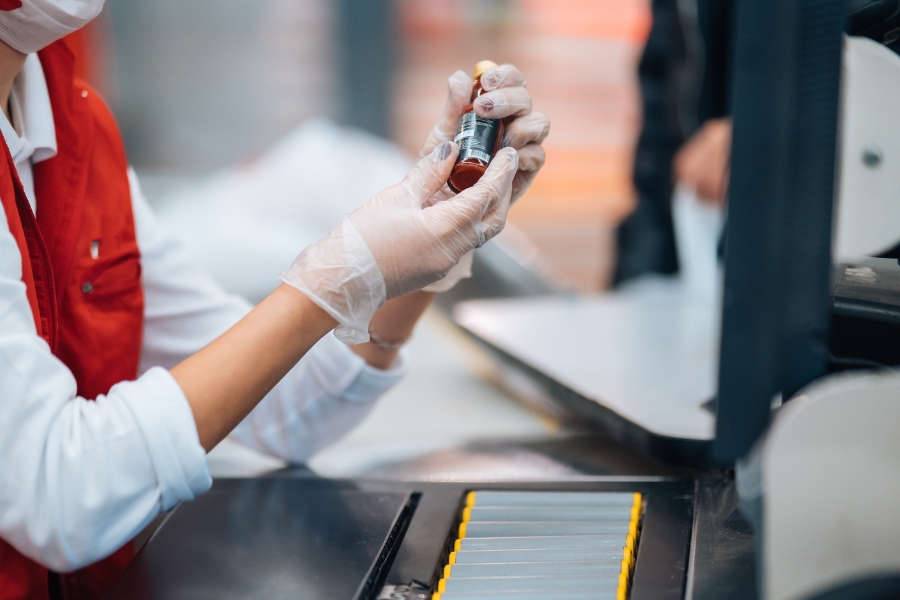
Pre‑Print QA Station Checks
Pre-print checks confirm that the approved artwork matches the final print file. These checks typically involve:
- Digital or manual artwork comparisons
- Automated proofreading inspections
- Color verification using a spectrodensitometer
- Barcode and UPC grading for retail compliance
These steps help prevent errors before printing even begins. Catching these errors early reduces scrap and avoids costly reprints.
Equipment and Materials Setup
Operators must verify that all materials match the job specifications. This includes stock type, adhesives, coatings, die cuts, and tooling. Even small mismatches can lead to misaligned labels, adhesive failure, or poor print clarity.
Proper setup protects both the converter and the customer by ensuring consistency from the very start.
Real‑Time Error Detection During Printing
During printing, errors can be detected manually with a strobe light or digitally with Advanced Vision Technology (AVT) inspection units.
Manual inspection relies on the operator’s trained eye. Digital inspection uses cameras to flag issues such as color shifts, registration errors, or substrate defects. When an error is found, production stops, adjustments are made, and printing resumes only when quality is restored.
Final Inspection and Packaging
Before labels are sent to the customer, teams perform final checks on rewind tension, roll integrity, and packaging accuracy. Even small details, such as proper boxing and roll labeling, affect the customer’s ability to run their production lines efficiently. A mislabeled box or uneven roll can cause delays, rework, or downtime.
What Processes Are Crucial to Maintaining Label Quality?
Three core stages of quality control work together to protect label quality from start to finish: pre‑production evaluation, output sampling, and storage and transit testing.

Pre‑Production Evaluation
Early evaluation helps catch potential issues before printing begins. Technicians may inspect packaging samples, check alignment with the dieline, and confirm layflat properties for pressure‑sensitive labels.
A dieline is the outline that shows where a label will be cut. Layflat refers to how smoothly the label sits on the roll or liner. Both are essential to proper application.
Technicians also look at the container shape and surface to confirm the label is compatible with the product and its intended application. Most standard tolerances allow a deviation of up to 1/16 of an inch. This small margin ensures labels remain consistent without slowing down production.
Output Sampling
Once printing begins, sample labels are pulled from the line for inspection. This helps teams identify defects such as bubbles, wrinkles, debris, distortions, or ink inconsistencies.
Common issues vary by label type. Pressure‑sensitive labels may face adhesive bleed or wrinkling. Shrink sleeves may distort if improperly cut or stored. By reviewing samples in real time, teams can catch problems early and maintain more consistent output.z
Output sampling also improves yield by addressing issues before hundreds or thousands of labels are produced.
Storage and Transit Testing
Labels must withstand the same conditions that the packaged product will experience. That means exposing them to heat, cold, humidity, handling, vibration, and other real‑world factors.
During this testing, teams evaluate:
- Adhesive strength
- Print clarity
- Ink durability
- Laminate or coating integrity
These tests ensure labels look consistent from production through retail display.
H2: Partner with Paramount Global for Labeling Solutions That Prioritize Quality
Label quality control goes beyond a technical step in production. It’s a strategic investment in brand consistency, customer satisfaction, and retail success. Brands need label partners who understand this responsibility and deliver at every stage.
Paramount Global brings deep expertise in label production. We support it through partnerships with advanced quality control technology and teams with experience in the retail and consumer markets.
We also offer collaborative, one-on-one consultations for custom packaging design and labeling services. This approach helps brands select the right materials, finishes, adhesives, and formats for each product and container. We consider container shape, product use, and retail conditions. With integrated supply chain capabilities and volume-based pricing, we support mid-size businesses looking to scale.
If you want labeling solutions built on accuracy, consistency, and performance, Paramount Global is ready to help. Contact us today to schedule your free packaging consultation.


Hayley is a marketing professional and copywriter with a background in crafting content for a diverse range of industries. She has been writing about packaging and supply chain logistics for Paramount Global since 2022. She specializes in explaining complex topics in a clear and engaging way and is an advocate for sustainability in packaging and supply chain management.
Read More




For over forty years, Paramount has been delivering perfectly integrated packaging and supply chain solutions.