






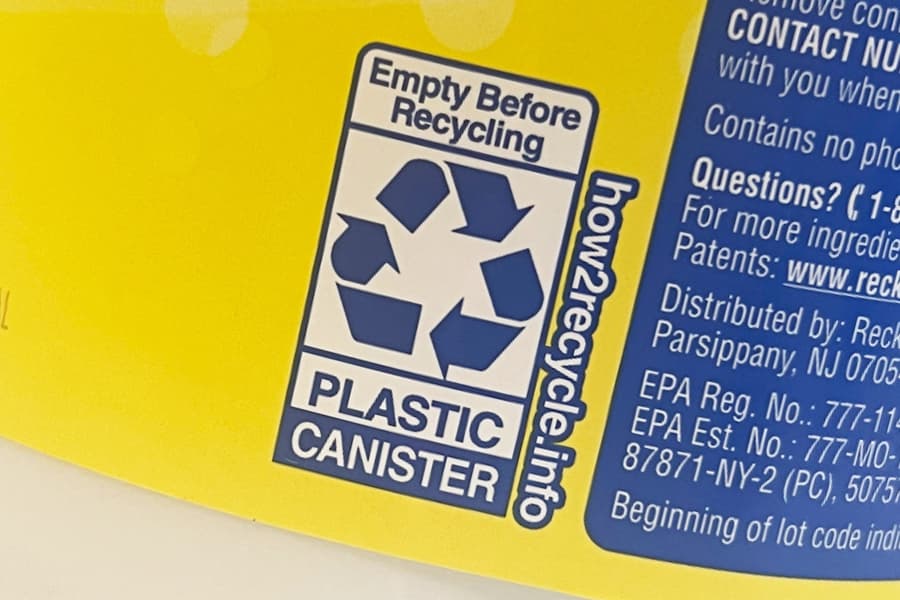
Have you ever looked at the small numbers on the bottom of plastic packaging and wondered what they mean? Does it mean the item is recyclable? In this article, we explain what those “recycling numbers” are, what they really tell you, and why a recycling symbol does not always mean an item can go in your curbside bin. We also cover how local rules affect recyclability and how businesses can make smarter sustainability choices.
Table of Contents
- What Are Recycling Numbers?
- Understanding What Recycling Numbers Mean
- Recyclability and California Senate Bill 343
- Plastic Recycling Numbers 1–7
- Other Recycling Numbers
- Why Recycling Is More Complicated Than It Looks
- Does a Recycling Symbol Guarantee Recyclability?
- Local Rules and the Reality of Recycling
- The Growing Importance of Green Packaging
- Frequently Asked Questions About Recycling Numbers
- Partnering With Sustainable Packaging Suppliers
- Make More Informed Sustainability Choices Today
What Are Recycling Numbers?
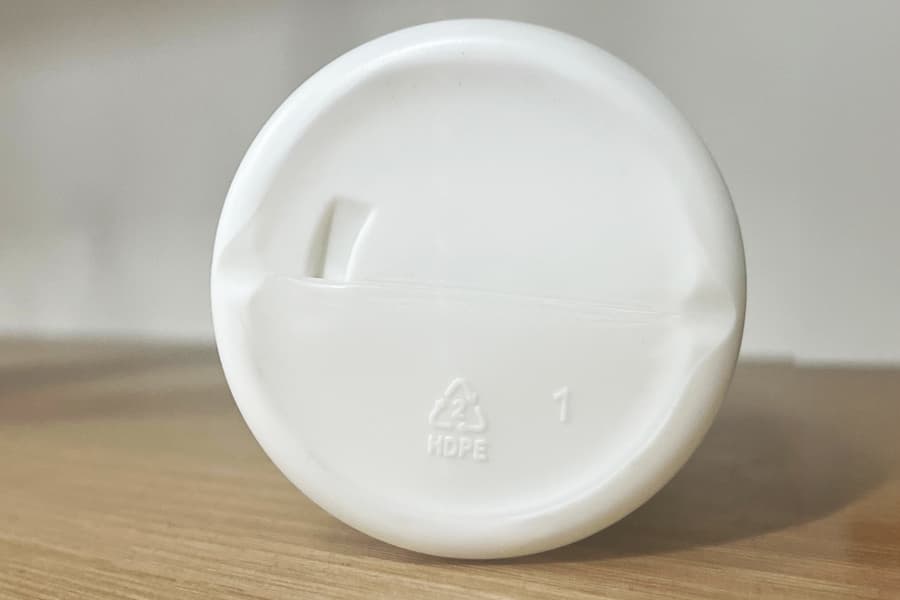
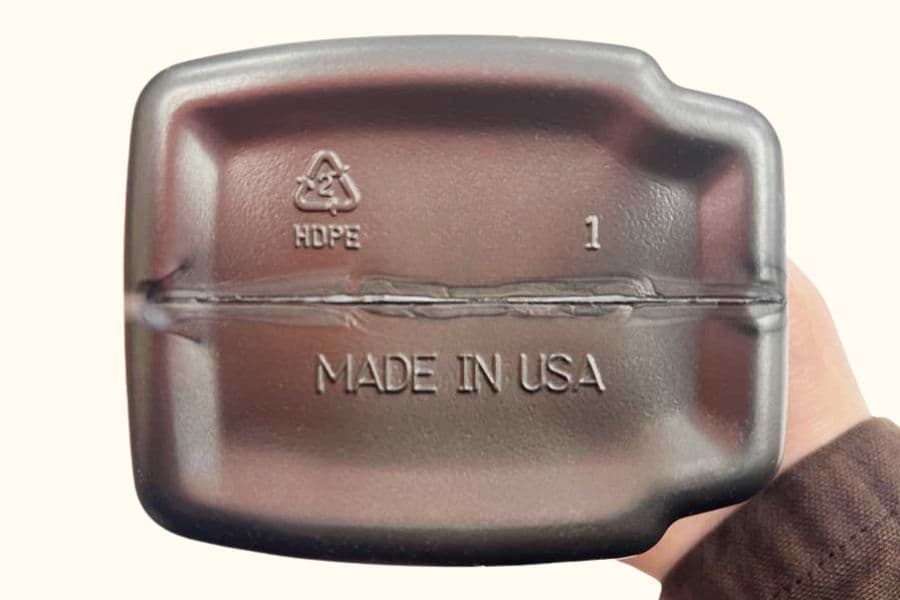
Recycling numbers identify the type of material used to make a product, especially plastics. You usually find these numbers at the bottom of containers, inside a triangle of three arrows.
Many people assume that the arrows mean an item is recyclable. However, that’s not always true.
Understanding What “Recycling Numbers” Mean
The rules and symbols on plastic products can be very confusing for people. Not all plastic is recyclable, and there is a difference between the Resin Identification Code (RIC) on plastic containers and the Recycling Symbol on many products and packaging.
- The Recycling Symbol is the triangle with three chasing arrows.
- The Resin Identification Code is the number inside a chasing-arrow triangle (different from the recycle symbol) and is often accompanied by an abbreviation for the plastic resin type (e.g., PET or HDPE). Beginning in October 2026, the chasing arrow symbol will be removed from products and packaging sold in California that are not easily recyclable and replaced with a closed triangle, per California’s SB 343.
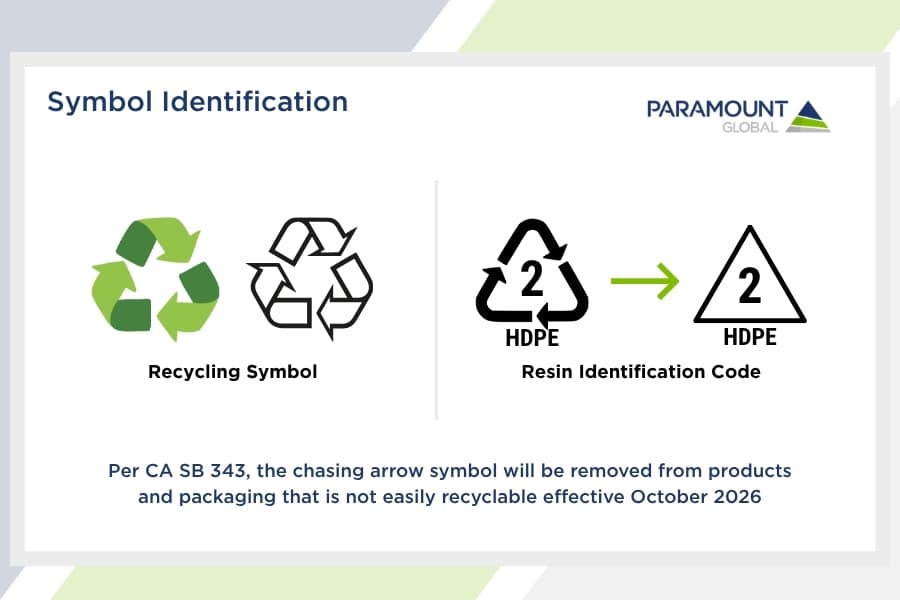
The Resin Identification Code was developed by the Plastics Industry Association (formerly The Society of the Plastics Industry, or SPI). There are seven unique RICs, ranging from 1 to 7, and they are often misidentified as recycling codes or recycling numbers.
However, the recycling code is solely a triangle with the three chasing arrows, which represent “Reduce, Reuse, Recycle.” This symbol was designed in 1970 by Gary Anderson, a student at the University of Southern California. His design was part of a nationwide contest sponsored by the Container Corporation of America (CCA) in response to World Earth Day. As consumers became more environmentally conscious, the CCA sought to develop a label for recycled and recyclable products and to raise awareness about recycling.
Generally, both the RIC and the recycle symbol are located at the base of the container.
Recyclability and California Senate Bill 343
California’s SB 343 is the first state law in the US to restrict the use of the chasing arrows symbol unless a product or package meets defined recyclability criteria. Yet today, thirty-nine US states mandate the use of this coding system on plastic bottles and rigid plastic containers. Additionally, more than thirty-five states require certain plastic packaging to display a resin identification code with the chasing arrows, creating a major potential conflict. Because of these overlapping rules, companies need to consider their obligations carefully and seek legal advice when needed.
Understanding what RICs mean and knowing what your local recycling facility accepts should help you determine whether something is recyclable.
Plastic Resin Identification Codes (1–7)
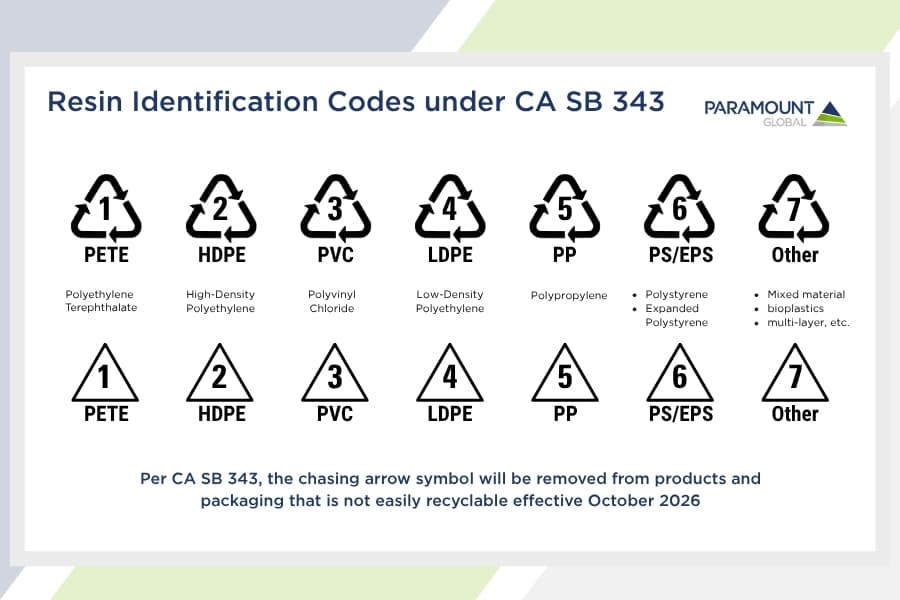
1. PET or PETE (Polyethylene Terephthalate)
PET or PETE is one of the easiest plastics to recycle and is widely accepted curbside.
Common Uses of PET//PETE:
- Water and soda bottles
- Peanut butter jars
- Salad dressing and oil containers
Recycled PET, also called rPET, becomes:
- Carpet fibers
- Fleece clothing
- Tote bags
- Food and beverage containers, and more
2. HDPE (High-Density Polyethylene)
HDPE also recycles easily and is accepted by many curbside programs.
Common Uses for HDPE:
- Milk and juice jugs
- Shampoo bottles
- Household cleaners
- Motor oil containers
Recycled HDPE becomes:
- Recycling bins
- Plastic lumber
- Pipes
- Fencing and floor tiles
3. PVC (Polyvinyl Chloride)
PVC is difficult to recycle because it has a lower melting point than PET and HDPE and contains chemicals that can contaminate our environment.
Common Uses for PVC:
- Toys
- Plastic wrap
- Vinyl siding
- Blister packaging
When recycled, PVC becomes:
- Decking
- Gutters
- Carpet backing
- Traffic cones
4. LDPE (Low-Density Polyethylene)
Depending on the form, LDPE ranges from easy to moderately difficult to recycle. The rigid form can typically be recycled curbside, but the flexible form (e.g., thin plastic bags used for bread and frozen foods, shrink wrap, bubble wrap, etc.) must be taken to a store drop-off location and cannot be placed in the curbside recycling bin.
Common Uses:
- Bread and frozen food bags
- Shrink wrap
- Bubble wrap
- Squeezable bottles
Recycled LDPE becomes:
- Trash can liners
- Shipping envelopes
- Floor tile
- Lumber
- Furniture
- Compost bins
5. PP (Polypropylene)
PP is somewhat difficult to recycle. Not all curbside recycling programs accept it, but the number of facilities that do is growing.
Common Uses for PP:
- Yogurt containers
- Bottle caps
- Medicine bottles
- Straws and condiment bottles
- Rope
- Furniture
- Luggage
- Toys
Recycled PP becomes:
- Storage bins
- Shipping pallets
- Car battery cases
- Ice scrapers
- Oil funnels
- Brooms
- Brushes
- Cables
- Trays
6. PS (Polystyrene)
PS is difficult to recycle. Polystyrene is often referred to as Styrofoam because of the similarities between Expanded polystyrene foam (EPS) and Styrofoam. However, Styrofoam is a trademarked brand manufactured by DuPont. This closed-cell extruded polystyrene foam (XPS) is different than EPS. Polystyrene can take various forms and can be made into rigid containers such as jars. The foam form is challenging to recycle because it is composed mainly of air which makes recycling costly and inefficient.
Common Uses of PS:
- Egg cartons
- Disposable food service items
- Protective packaging
When recycled, PS becomes:
- Thermal insulation
- Thermometers
- Egg cartons
- Protective packaging
7. Other Plastics
Plastics labeled as #7 or “other” are difficult to recycle due to their lack of standardized plastic identification. The symbol covers materials including BPA-containing plastics, other mixed plastics, and even newer, more eco-friendly plastics, such as PLA (polylactic acid).
Common Uses:
- Three-gallon and five-gallon water bottles
- Certain food containers
- Bulletproof materials
- Nylon
- Baby bottles
- Sporting equipment
- Sunglasses
Most #7 plastics are not recyclable. However, some specialty facilities recycle certain materials into plastic lumber or other bottle applications.
Other Recycling Numbers
While non-plastic materials also have recycling codes, these codes primarily help sorting facilities identify the material. Most of these items are accepted in different recycling programs regardless of whether a code is visible, with exceptions.
Paper Recycling Numbers
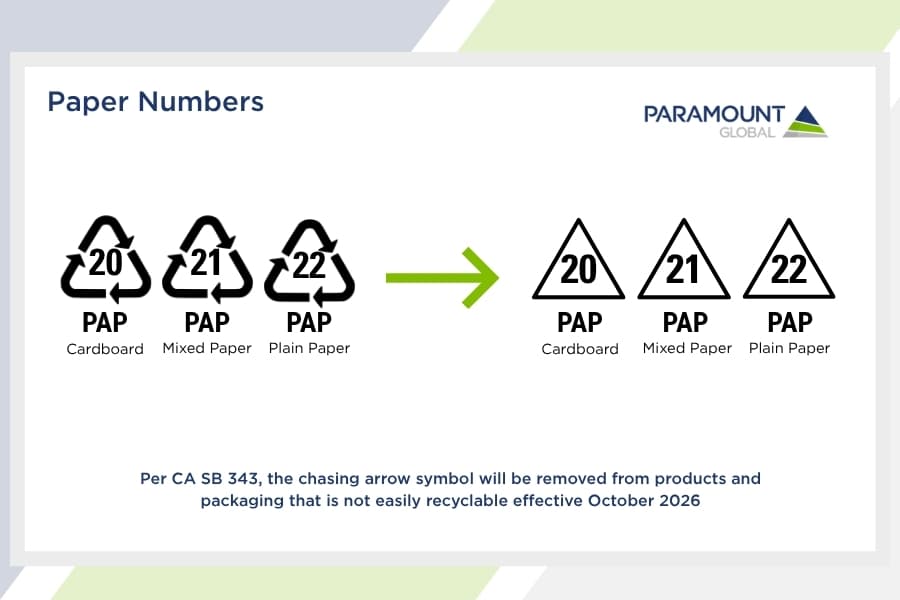
The majority of paper products are recyclable. According to the American Forest and Paper Association, in 2022, 67.9% of paper was recycled, and 93.6% of cardboard boxes were recycled. However, laminated paper and dirty or greasy paper cannot be recycled. So that grease-stained pizza box isn’t going to be recycled, toss it in the trash instead of the recycle bin.
There are three types of paper recycling codes:
Paper Codes
- 20-PAP: Corrugated cardboard
- 21-PAP: Non-corrugated fiberboard, cereal boxes, gift boxes, mixed paper
- 22-PAP: Printer paper, newspapers, books, catalogs, paper bags
Metal Recycling Numbers
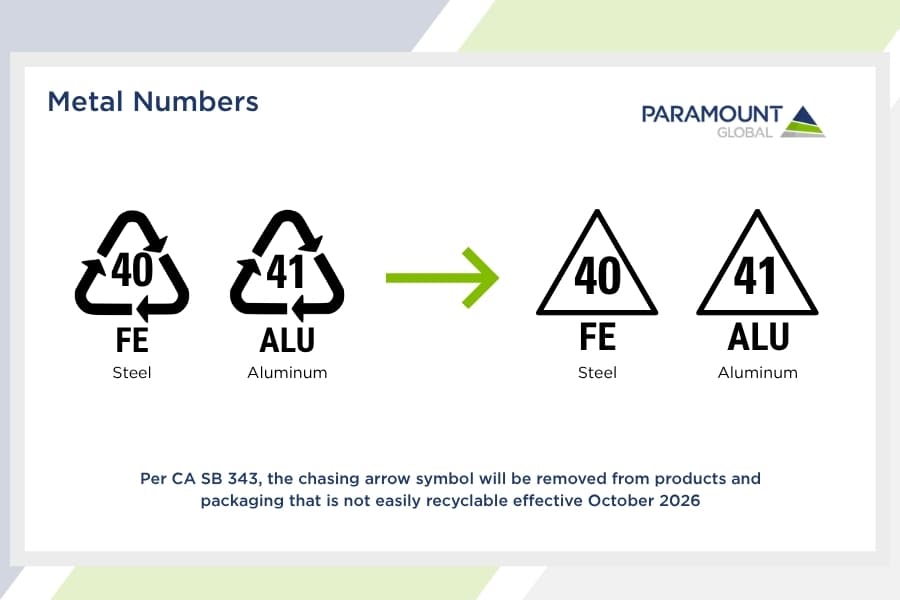
Metal products and packaging are commonplace in our daily lives. One of the most common products used today is the aluminum can. Thankfully, these are widely accepted at most recycling facilities and are among the easiest and most profitable products to recycle. Unfortunately, other metal items can be more challenging to recycle, so you’ll need to check to see what is accepted locally before tossing something in the bin and *hoping* it gets recycled.
There are two types of recyclable metal codes:
Metal Codes
- 40 FE (Steel): Steel food cans (like soup or tuna) and aerosol cans. Does not refer to steel used in buildings or ships. Can be recycled and reused indefinitely.
- 41 ALU (Aluminum): Aluminum packaging, including soft drink and beverage cans, aluminum foil, single-use food containers, and more. Aluminum remains one of the most valuable recyclable materials.
Glass Recycling Numbers
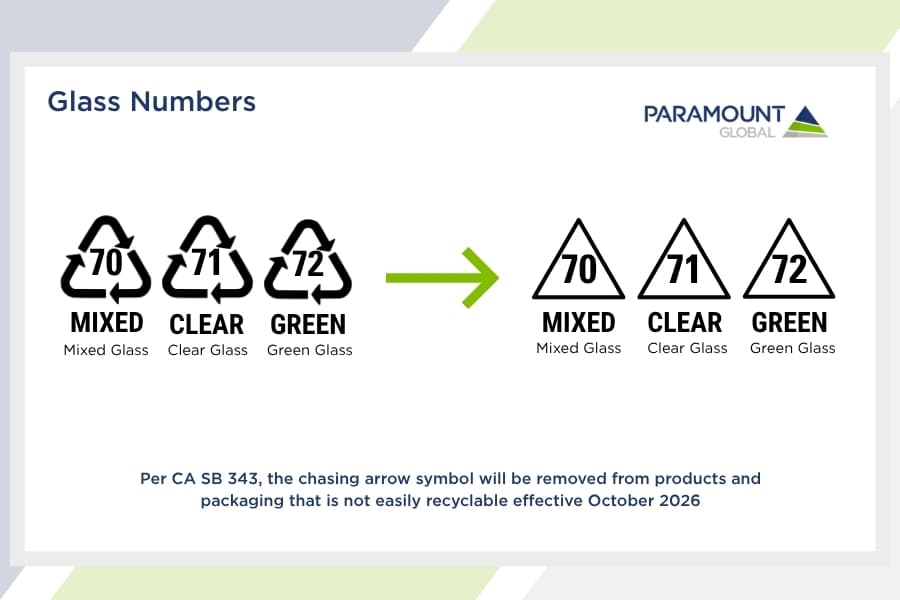
In general, glass is a highly recyclable and reusable material, which has led to widespread claims of sustainability. However, there is a lot of conflicting information on how easily recyclable it actually is. For example, in mixed curbside recycling bins, glass is often broken during processing, contaminating the stream. Items like drinking glasses, vases, and mirrors have different melting points and chemical compositions. If these materials are mixed with glass that made into the recycling stream, it can contaminate or weaken the recycled glass, which hurts recycling programs.
Here are some of the most frequently used glass recycling codes:
Glass Codes
- 70 GL – Mixed Glass: Mixed glass containers or multi-part containers. Check with your local facility for how to recycle this type.
- 71 GL – Clear Glass: Clear glass containers. Clear glass is easily recyclable, but be sure to thoroughly rinse the item out. Depending on local regulations, some cities require you to separate clear glass from colored glass, while some facilities will do the sorting for you.
- 72 GL – Green Glass: Green glass, used for wine and olive oil bottles. Green glass is good for products that are sensitive to light. Green glass usually needs to be sorted and recycled separately due to its manufacturing process.
One of the best things about glass containers is that they can be reused indefinitely for various things, like storage or even as planters. There are many ways to reuse glass containers, so save money and waste less by using items you already have on hand. You can also donate gently used glass items.
Recycling is, unfortunately, a complicated process that varies greatly depending on where you live. As consumers, we are inclined to recycle packaging that looks to be recyclable, but what really happens once that item enters the recycling stream? There are several factors that hinder recyclability. Let’s explore some of the most common issues when it comes to recycling.
Why Recycling Is More Complicated Than It Looks
Confusion around Glass Recyclability
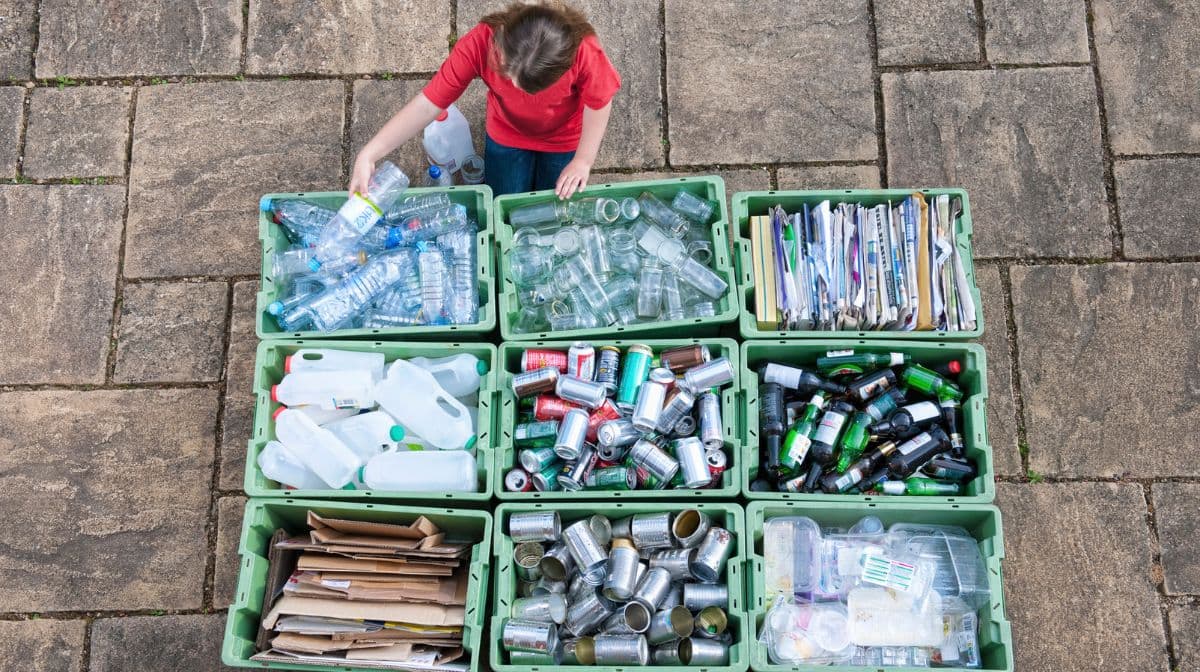
According to Dale Gubbels, founder of First Star Recycling, one of Nebraska’s largest recycling facilities, glass is a major issue. While many curbside recycling bins accept glass, glass cannot withstand compaction, and broken glass creates safety hazards and contaminates other materials. While many recycling facilities use optical sorters, there are also people manually sorting out items that should never have been put into the recycling stream. Dale’s advice is clear: don’t put glass in mixed recycling.
There are also specific types of glass items that are more challenging to recycle. For example, electronics that contain glass may be recyclable through an electronics waste program, or you can check what’s accepted locally. Certain items, such as broken stemware, drink glasses, porcelain, windows, ovenware, and Pyrex, cannot be recycled. These glass types are composed of mixed materials, which can contaminate the recycling process. Other items, such as broken or burned-out light bulbs, may need to be disposed of as household hazardous waste. Check your local guidelines to learn how to properly dispose of this type of bulb.
As awareness spreads, consumers can make more informed decisions about recycling and resist the urge to wishfully recycle items that will harm the recycling stream.
Inconsistent Rules
Recycling is a complex issue that confuses most people due to inconsistent rules that vary by city, state, and country. On top of that, recycling messages to consumers is limited and oftentimes unreliable. This confusion has led most people to toss any and all “recyclable materials” into the recycling bin, resulting in more waste going to landfills instead of being recycled.
The rule of thumb should always be to check what your local recycling facility accepts from the curbside bin, and look up where you can drop off or send materials that aren’t accepted curbside. Depending on where you live, there are options for recycling materials that can’t be collected in your curbside bin. For example, many retailers accept plastic bags and batteries in specially designated bins in-store. There are also companies like Ridwell and Hefty’s ReNew program that exist to help divert waste from landfills.
Multi-Material Packaging
Multi-material packaging is not recyclable unless the materials are separated. A plastic pump with a metal spring, for example, needs to be disassembled before recycling. However, recent innovations in packaging, such as all-plastic pumps, are much easier to recycle and don’t require disassembly.
Contamination
Food residue ruins recyclable materials. Soiled items tossed in the recycling bin will not be recycled because contamination can damage the recycling process. Be sure to always rinse containers before recycling, and if something is dirty, like a greasy pizza box, throw that in the trash bin instead of recycling.
Consumer Confusion
Considering how drastically rules and regulations vary by location, it’s not surprising that there’s so much confusion around packaging recyclability. The best way to clear up confusion is to research how to recycle in your area.
In the UK, the on-pack recycling label (OPRL) educates consumers on how to recycle products. In North America, we have How2Recycle. This member-based label system was created to provide consistent and transparent on-pack disposal information to consumers in the US and Canada. These types of labels are a great way to communicate clearly and effectively exactly how to dispose of your container when it’s done.
Does a Recycling Symbol Guarantee Recyclability?
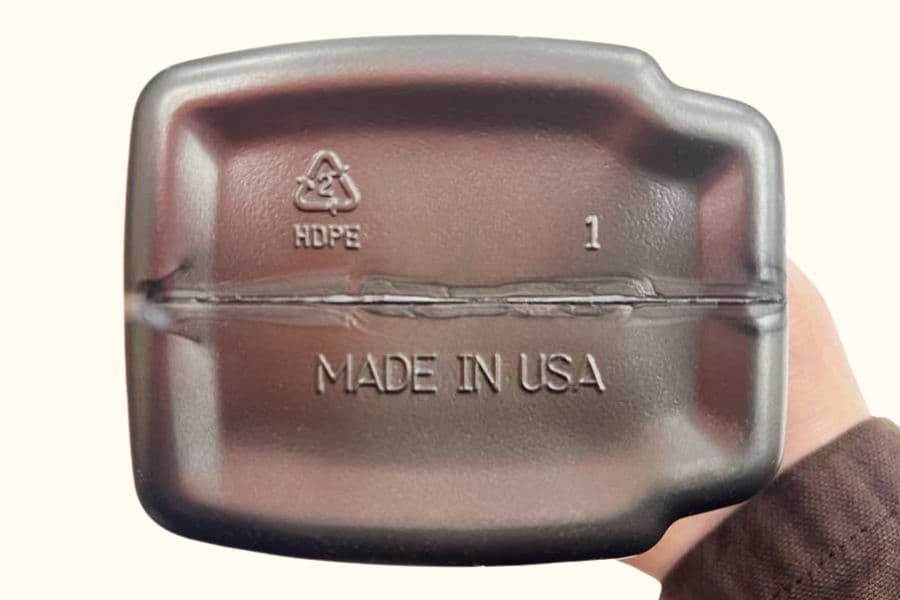
Just because a package displays a recycling symbol or a resin code does not mean it is recyclable. The resin code only identifies the material, not that the item is recyclable. The recycling symbol also does not guarantee that the item is recyclable. It could mean that the item was made with recyclable material, not necessarily that it is recyclable now. With CA SB 343, the use of the recycling symbols on a product will mean that the product is widely recyclable in the state. However, the absence of a recycling symbol doesn’t mean a product is not recyclable; it might just require more effort to recycle than simply dropping it in your curbside bin.
Always check local guidelines before recycling an item to ensure it is actually recyclable and won’t cause issues in the recycling stream.
Local Rules and the Reality of Recycling
Recycling is a universally recognized component of being environmentally responsible. Yet it is a complex infrastructure that varies greatly by region and local municipality regulations.
Regulations can directly affect how materials are recycled. They also shape how businesses operate and how consumers make decisions.
To keep up, it is important to understand how recycling programs differ by region and how rules and material restrictions continue to evolve. Policy changes can also affect daily operations in ways that are not always obvious at first. When you understand these moving parts, it becomes easier to navigate a complex and constantly evolving landscape.
Regional Differences
Local policies, infrastructure, and community priorities and preferences all contribute to inconsistencies in recycling programs across municipalities. Some regions have robust recycling programs that accept a variety of materials and have a range of markets for recycled materials. Still, other regions have limited options due to a lack of recycling facilities or low market demand for recycled goods. These differences pose challenges for residents and businesses who want to stay informed and do their part to properly recycle accepted materials.
Changing Rules
As technology advances and market demands change, recycling rules and material restrictions also evolve. New materials and packaging innovations often outpace recycling systems and regulations, which creates confusion about what people can actually recycle.
Contamination is another issue. When people place dirty or non-recyclable items in recycling bins, it can disrupt the process. In response, some cities limit the types of plastics they accept to reduce contamination and improve efficiency.
Both businesses and consumers need to stay informed as these rules evolve. Understanding current guidelines helps everyone make better choices and support recycling programs.
Business Impacts
Changes in local recycling rules can have a big impact on businesses, especially in manufacturing, retail, and waste management. Companies may even need to update their packaging to meet new requirements. This can increase costs and create supply chain challenges.
Waste management companies also need to adjust how they sort and process materials to stay aligned with changing criteria on what materials are accepted.
These operational changes take careful planning and clear communication. When businesses prepare ahead of time, they can reduce disruptions and keep operations running smoothly.
Brand Reputation
Consumers care more than ever about sustainability, and they expect brands to show real environmental responsibility. Recycling plays a big part in that expectation. Many consumers look for products made with recyclable materials and want brands to take clear steps to reduce waste.
When companies fail to meet these expectations, they risk damaging their reputation and losing customer trust. On the other hand, brands that prioritize environmental stewardship and communicate their efforts clearly can stand out in a crowded market.
By staying informed and being transparent, companies can build a stronger brand image and connect with environmentally conscious customers.
The Growing Importance of Green Packaging
Green packaging alternatives will continue to gain importance as long as sustainability remains a top priority. While today’s recycling and waste management systems face real challenges, stopping the production of new materials is not a realistic solution. The better path forward is to invest in stronger, more efficient recycling infrastructure.
Plastic often gets a bad reputation, but recycled plastic, including rPET, offers real sustainability benefits. It helps reduce waste, lowers the need for new raw materials, and supports a more efficient recycling system.
When companies invest in packaging that is recyclable, compostable, or biodegradable, they take a meaningful step toward a circular economy. These choices help reduce carbon footprints and keep materials in use longer, rather than sending them to landfills.
Frequently Asked Questions About Recycling Numbers
Understanding recycling numbers can help you make packaging choices that are compliant, cost-effective, and support sustainability. Here are answers to some of the questions we often get from packaging buyers and brand teams.
1. What do recycling numbers mean for packaging buyers?
Recycling numbers show what kind of plastic resin or material is used in packaging. They help you determine whether something might be recyclable and where it fits within recycling systems. Still, these numbers do not guarantee that a package can actually be recycled.
2. Which plastic types should I prioritize for recyclable packaging?
Try to use #1 PET and #2 HDPE, since most curbside programs accept them. #4 and #5 may be accepted in some places, but #3, #6, and #7 are usually not recyclable.
3. Does adding a recycling symbol make my packaging compliant?
No, adding a recycling symbol alone does not guarantee compliance or recyclability. Your packaging claims must align with the realities of recycling collection and processing, especially as regulations evolve.
4. How does California SB 343 impact packaging decisions?
California’s SB 343 only allows the use of recycling symbols if the material is widely collected, sorted, and reprocessed. Under this new law, brands must demonstrate recyclability with real data rather than assumptions.
5. Why do recyclability claims vary by region?
Recycling programs vary by region based on local facilities and market demand. A material that is accepted in one area might not be accepted in another, which can affect how you label and design your packaging.
6. What design choices can make packaging harder to recycle?
Here are a few common packaging pitfalls that affect recyclability and can cause issues in the recycling stream:
- Multi-material components that cannot be separated
- Flexible films in curbside streams
- Packaging that is difficult to empty or clean
7. How can I reduce the risk of contamination in recycling streams?
To reduce the risk of contamination, choose packaging that:
- Is easy to empty and rinse
- Labels that are easy to remove
- Uses fewer material types
- Avoids bonded or mixed components
8. Are recycling numbers enough to guide sustainable packaging decisions?
No. Resin codes are just one factor. You should also look at:
- Local acceptance rates
- End-market demand
- Regulatory requirements
- Supplier transparency
9. What is the biggest mistake brands make with recyclability claims?
The biggest mistake is thinking that “technically recyclable” means “widely recyclable.” This can lead to compliance problems and hurt your brand’s reputation.
10. How can packaging suppliers support better recycling outcomes?
Strong suppliers can help you:
- Select the most sustainable or recyclable materials
- Navigate regulations like CA’s SB 343
- Design and develop sustainable packaging solutions
- Validate recyclability claims
At Paramount Global, we’ve got you covered. Reach out to us to learn more.
Partnering With Sustainable Packaging Suppliers
Partnering with the right packaging supplier is one of the best ways to build a more sustainable supply chain. Look for partners who can clearly measure and demonstrate their sustainability efforts, and ensure their values align with yours.
When you work with the right suppliers, you gain confidence in your entire process. You know they are taking real steps to reduce waste, lower their carbon footprint, and manage their operations responsibly.
Make More Informed Sustainability Choices Today
Sustainability continues to shape how businesses approach packaging. As this focus grows, companies must plan ahead and stay ready to meet new rules and regulations.
At Paramount Global, we stay informed so we can guide our customers every step of the way. We help you understand sustainable materials and share clear guidance to keep your business compliant and up to date.
Our packaging specialists support your growth with tailored solutions. We offer global product sourcing, packaging design, warehousing, and supply chain support to fit your needs. Partner with us to move forward with confidence.
Contact us today to get started.
Looking for more information? Learn more about how Paramount prioritizes sustainability.
This article was originally published on March 12, 2019 and updated on June 17, 2026.